
Reviewed · COLOMBO
Colombo Social and Political Walk
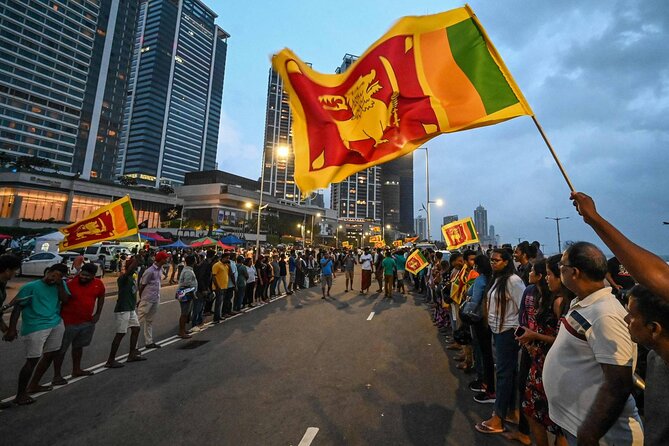
Sri Lanka’s present crisis gives this Colombo walking tour unusual weight. Starting near the port and ending at BMICH, it uses Colombo’s streets and landmarks to explain how the modern state took shape, how politics and economics affect daily life, and why shortages of food, fuel, and electricity have caused such serious disruption.
I like the route’s clear sense of purpose, and I like that it links big ideas to real places, including Pettah market, the World Trade Center, and Old Parliament. Guide Chami is singled out for explaining the subject well, but this is not a light sightseeing stroll. You should expect a dense, information-heavy two and a half hours.
The main drawback is the subject itself. If you want temples, food tastings, or easygoing photo stops, this walk may feel too serious. It suits you best if you want political and economic context, and if you are willing to listen closely.
In This Review
- Key points at a glance
- Why this Colombo walk is different
- Meeting at The Kingsbury at 5 pm
- Port City and Pettah: development beside daily commerce
- Good market and Tea Avenue at the Dilmah Building
- The World Trade Center and Old Parliament
- Independence Square and BMICH: national identity and public life
- How much information will you receive?
- What $35.99 means in value
- Who should book this experience?
- Should you book the Colombo Social and Political Walk?
- FAQ
- Where does the Colombo Social and Political Walk start?
- What time does the walk begin?
- Where does the walk end?
- How long does the experience last?
- What places are included on the route?
- How much does the experience cost?
- How large can the group be?
- Can I cancel for a refund?
Key points at a glance
- A documentary-style route: The walk focuses on Sri Lanka’s social, political, and economic story rather than simple sightseeing.
- Eight major Colombo stops: You visit Colombo Port City, Pettah market, Good market, Tea Avenue at the Dilmah Building, the World Trade Center, Old Parliament, Independence Square, and BMICH.
- Guide Chami leads the experience: The guide is noted for explaining Sri Lanka’s recent history and political background clearly.
- A useful route through modern Colombo: The walk connects commercial, civic, and national landmarks in one continuous journey.
- A small group setting: The maximum group size is 25 people, which should make it easier to follow an information-heavy talk.
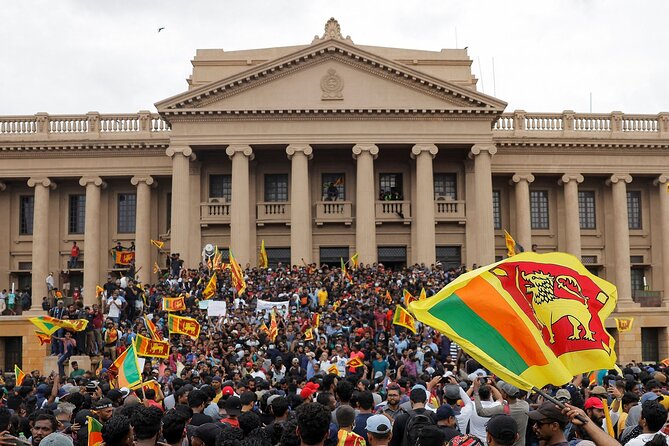
- A serious look at a country in crisis: The experience addresses shortages and disruptions affecting food, fuel, electricity, businesses, and healthcare.
Why this Colombo walk is different
Many city walks use history as decoration. This one makes history the main event. The buildings and markets are evidence, examples, and talking points in a larger account of Sri Lanka’s modern state and current troubles.
The experience is designed to feel like a documentary you walk through. That means you are not simply told that a building is important. You are asked to connect the building with political decisions, economic pressures, social change, and the way those forces affect ordinary life.
I find that approach useful in Colombo because the city presents several versions of Sri Lanka at once. You move from a major development project and international business district to a traditional market, then on to national institutions and public monuments. The route gives you a way to compare those parts of the city rather than seeing them as unrelated sights.
The tone is meant to be balanced and non-partisan. You are given background on historical and current events, then left to form your own view. That is a good fit if you want first-hand research and a clearer basis for understanding the country.
A few more days out of Colombo worth weighing up
- Colombo Walking Tour with Ajeet De Soyza
★ 5.0 · 43 reviews - Glimpse Of Colombo City Walk
★ 4.5 · 11 reviews
Meeting at The Kingsbury at 5 pm
The walk begins at The Kingsbury Colombo, at 48 Janadhipathi Mawatha. The 5 pm start is practical for a city walk of this type. You avoid the hottest part of the afternoon, and the route moves through Colombo during the early evening period.
You should arrive ready for a steady, information-heavy outing. The listed duration is about 2 hours and 30 minutes, and the route ends at BMICH rather than returning to the starting point. Plan your evening around that one-way arrangement.
The walk is supplied as a mobile ticket, and confirmation is received when you book. The group can include up to 25 people. That is not an intimate private walk, but it is still a controlled size for a presentation that depends on listening and questions.
The meeting and ending points also give the experience a clear geographic shape. You start near Colombo’s modern waterfront and finish at one of the city’s major civic venues. In between, you pass through commercial, political, and national spaces.
Port City and Pettah: development beside daily commerce
Colombo Port City is the first listed stop. It gives the walk a place to discuss modern development, investment, and the direction in which Colombo is being built. Because the tour examines the relationship between politics and economics, this is a fitting opening point.
You should not expect the stop to function as a conventional attraction visit. Its value lies in the questions it raises. What kind of city is Colombo trying to become? Who benefits from major development? How does a new urban project fit into the country’s wider economic pressures?
From there, the route moves to Pettah market. The contrast matters. Pettah is a commercial setting tied to everyday trade, while Port City represents a large-scale vision of Colombo’s future. Placing the two on one route helps you think about development in practical terms rather than as an abstract policy topic.
Pettah also makes the social side of the walk more immediate. The tour’s purpose is not simply to discuss crisis conditions from a distance. It connects national problems with places where commerce, supply, and daily needs are part of the city’s public life.
Good market and Tea Avenue at the Dilmah Building
Good market is another stop on the route. The supplied details do not specify a separate theme for this location, so Chami’s explanation will determine how much time and discussion it receives. Still, its inclusion supports the walk’s interest in food, commerce, and the social effects of economic strain.
Tea Avenue at the Dilmah Building adds another useful point of reference. Tea is closely tied to Sri Lanka’s public image and economy, and a stop connected with Dilmah gives the guide a place to discuss the role of a major national product and business.
You should see these stops as part of the wider argument rather than as stand-alone shopping visits. There is no stated tasting, meal, or shopping component. If you are hoping to buy tea or browse a market at length, ask about the pace at the start so your expectations are clear.
I like this section because it keeps the walk connected to things people can understand quickly: markets, products, businesses, and the movement of goods. Those subjects can make political and economic ideas easier to grasp than a talk held in a classroom.
A different kind of day, still starting in Colombo:
- Colombo: Private Tuk-Tuk City Tour with All Entry Fees
★ 4.9 · 2,154 reviews - Sri Lanka Personal Tour Driver in private vehicle
★ 5.0 · 747 reviews - Colombo Tuk Tuk City Tour -Sightseeing Entry Fees & Food Included
★ 5.0 · 678 reviews - Udawalawe National Park: Elephant Safari with Expert Guide
★ 4.9 · 641 reviews
The World Trade Center and Old Parliament
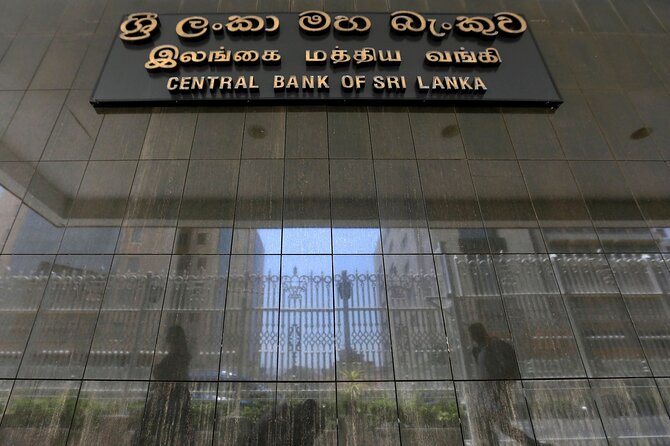
The World Trade Center shifts the story toward Colombo’s role in international business and finance. It is one of the route’s clearest reminders that the city is tied to larger economic systems, not only local trade.
This is where the tour can help explain the gap between economic ambition and economic hardship. Sri Lanka may present itself as an international commercial center, while the country also faces shortages and serious disruption. The point is not to reduce the situation to one simple answer. It is to examine how different parts of the economy fit together, or fail to do so.
Old Parliament brings the discussion into the political sphere. The building gives the guide a natural setting for explaining the machinery of government and the decisions that shape public life. The tour covers the creation of the modern state through to current events, so this stop helps connect institutional history with today’s debates.
The experience is strongest when you treat these buildings as more than photo backgrounds. Look for the links between commercial power, public policy, and national identity. That is the central habit this walk tries to teach.
Independence Square and BMICH: national identity and public life
Independence Square provides a clear setting for discussing national identity and the formation of the modern state. Its place on the route is logical because the walk does not begin with current events alone. It looks at how Sri Lanka became the country it is today.
You may find this part especially useful if you know the country mainly through beaches, tea, or colonial-era sights. The tour asks you to consider independence as a political process with long effects, not just as a monument and a date.
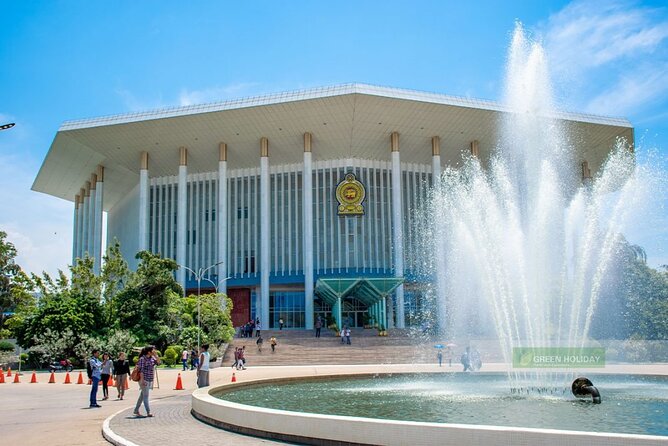
The final stop is BMICH, the Bandaranaike Memorial International Conference Hall, on Bauddhaloka Mawatha. The walk ends here after about two and a half hours. As a major civic and conference venue, it gives the route a formal closing point and keeps the focus on national institutions and public affairs.
Ending at BMICH also means you should think ahead about your next move. Since the tour does not return to The Kingsbury, check your onward plans before you set out. The one-way route is not a flaw, but it is an important practical detail.
How much information will you receive?
This is an information-heavy experience. The format is closer to a spoken documentary than to a relaxed walk with a few historical notes. You will hear about social and political elements of Sri Lanka, modern history, economic conditions, and current events.
The review provided describes the experience as a politics and economics 101 lesson combined with Colombo sightseeing. That is a useful way to understand the balance. You get the city’s landmarks, but the explanation is the main product.
Guide Chami is specifically praised for being well informed. I would still recommend arriving with a few questions of your own. The experience is meant for people with a genuine interest in politics and those who want to conduct some first-hand research. You will get more from it if you listen for cause and effect rather than trying to memorize every date or institution.
The balanced approach is also important. This is not presented as a campaign speech or a one-sided political tour. It aims to cover different elements of Sri Lanka’s story and let you decide what you think. That makes the walk more useful for a curious visitor who wants context without being told what opinion to hold.
What $35.99 means in value
At $35.99 per person, the price is reasonable if you would otherwise spend an afternoon trying to piece together Sri Lanka’s recent political and economic story on your own. You are paying for a guide-led route, explanations at eight significant locations, and a structured account of events that can be hard to understand from isolated sightseeing.
The value depends heavily on your interests. If you want a short introduction to Colombo’s main sights, you can find simpler walks. If you want food, shopping, or interior visits, this experience does not promise those extras.
For a student, politically curious visitor, journalist, researcher, or anyone trying to understand the country beyond its postcard image, the price is easier to justify. The route gives you a framework for later visits and conversations.
The maximum group size of 25 keeps the price below that of a private guide while avoiding a very large crowd. Still, this is not a bespoke discussion. If you need a long personal conversation at every stop, a private arrangement would offer more flexibility, but no private option is described here.
Who should book this experience?
I would choose this walk if you want to understand why Colombo looks and functions as it does. It is suited to you if you enjoy current affairs, public policy, modern history, economics, or social questions.
It can also work well early in a Sri Lanka trip. The information may help you interpret later visits to markets, government buildings, business districts, and national monuments. You will have a clearer sense of the forces behind what you see.
I would not choose it for young children who need constant activity, or for anyone looking for a gentle introduction with lots of free time. The tour has a serious tone and a strong verbal component. You need to be comfortable walking between stops while concentrating on a sustained explanation.
Good weather is required. If poor weather cancels the experience, you are offered another date or a full refund. The tour also requires a minimum number of participants, so a cancellation for that reason comes with the same choice of another date or experience, or a full refund.
Should you book the Colombo Social and Political Walk?
Book it if your main question is not just What am I looking at? but Why does Colombo work this way? The route connects Port City, markets, business towers, political buildings, Independence Square, and BMICH into one focused story.
Skip it if your priority is a food tour, relaxed photography, or a broad list of attractions with only brief commentary. At $35.99, this is good value for serious context, but only if you want to spend 2.5 hours thinking about Sri Lanka’s political and economic life.
For the right audience, the combination of places and explanation is the real draw. Chami’s guidance, the small maximum group size, and the balanced approach make this a practical way to begin understanding modern Colombo.
FAQ
Where does the Colombo Social and Political Walk start?
The experience starts at The Kingsbury Colombo, 48 Janadhipathi Mawatha, Colombo, Sri Lanka.
What time does the walk begin?
The scheduled start time is 5:00 pm.
Where does the walk end?
The walk ends at BMICH, the Bandaranaike Memorial International Conference Hall, on Bauddhaloka Mawatha, Colombo 00700.
How long does the experience last?
The walk lasts approximately 2 hours and 30 minutes.
What places are included on the route?
The listed stops are Colombo Port City, Pettah market, Good market, Tea Avenue at the Dilmah Building, the World Trade Center, Old Parliament, Independence Square, and BMICH.
How much does the experience cost?
The listed price is $35.99 per person.
How large can the group be?
The experience has a maximum group size of 25 participants.
Can I cancel for a refund?
Yes. You can cancel at least 24 hours before the start time for a full refund. Cancellations or changes made less than 24 hours before the start time are not refunded or accepted.
Just added around Colombo
- Sri Lanka: Sinharaja rainforest tour from Colombo, Bentota★ 5.0 · 3 reviews
- From Colombo: Yala National Park Safari with Transfer★ 5.0 · 3 reviews
- All-inclusive Sigiriya, Dambulla and Wildlife Safari from Colombo★ 5.0 · 3 reviews
- Colombo: Local Food Tour & Sightseeing by Tuk-Tuk with Meals★ 4.0 · 3 reviews
- Colombo City to Dambulla City Private Transfer★ 5.0 · 3 reviews
- Safari Day Tour to Sigiriya Lion Rock and Golden Cave Temple★ 5.0 · 3 reviews
- Airport Taxi Transfers from Colombo Airport to Sigiriya★ 4.5 · 3 reviews
- Day Excursion to Yala National Park From Colombo★ 4.5 · 3 reviews